

Inflatable Rubber Core Mold for Bridge Construction: Complete Buyer’s Guide
An inflatable rubber core mold for bridge construction is a reusable flexible internal formwork system used to create hollow cavities inside concrete bridge components. It is commonly applied in hollow slabs, precast beams, box girders, culverts, tunnel sections, bridge decks, and other reinforced concrete structures where reducing dead weight and simplifying internal form removal are important.
Compared with rigid steel or timber inner molds, an inflatable rubber core mold can be installed while deflated, inflated to the required working pressure before concrete placement, and deflated after the concrete gains sufficient early strength. This allows the mold to collapse and be removed more easily from long or restricted internal cavities.
For contractors, precast concrete manufacturers, bridge engineering companies, and infrastructure buyers, choosing the correct inflatable rubber core mold requires more than comparing diameter and price.
The buyer should consider cavity geometry, mold length, rubber construction, reinforcement fabric, working pressure, fresh concrete pressure, buoyancy, reinforcement spacing, concrete cover, demolding access, reuse frequency, valve design, and expected production cycle.
A properly selected inflatable rubber core mold for bridge construction can improve cavity consistency, reduce formwork handling, shorten demolding time, lower storage requirements, and support repeated production.
An incorrectly selected mold may float, deform, leak, shift, puncture, or fail to maintain the required internal concrete geometry.
This complete buyer’s guide explains how inflatable rubber core molds work, their applications, materials, sizes, shapes, selection factors, installation requirements, quality considerations, maintenance, common purchasing mistakes, and technical information buyers should provide before ordering.
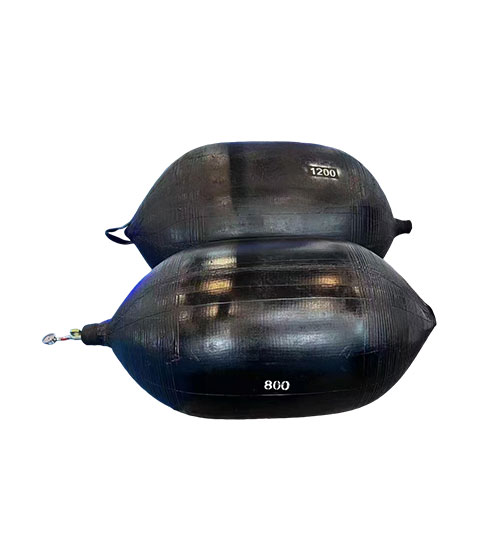
An inflatable rubber core mold is a flexible internal concrete mold manufactured from reinforced elastomeric materials.
It is placed inside a reinforcement cage to create a hollow internal section during concrete casting.
The product may also be referred to as:
Inflatable bridge void former
Inflatable rubber mandrel
Rubber inner mold
Inflatable concrete core mold
Inflatable concrete void former
A typical inflatable rubber core mold includes:
Airtight inner rubber layer
Reinforcement fabric
Protective outer rubber layer
Inflation valve
End section for pulling or positioning
The reinforcement fabric helps control expansion when the rubber core mold is pressurized.
The outer rubber layer protects the mold against abrasion, concrete contact, and repeated handling.
The working principle is simple.
The inflatable rubber core mold is inserted into the required position while deflated.
It is then inflated with air.
Internal air pressure expands the mold to the designed cross-sectional shape and gives it sufficient stiffness to resist the pressure of fresh concrete.
Concrete is placed around the inflated mold.
The inflatable rubber core mold maintains the internal cavity while concrete is poured, vibrated, and initially cured.
After the concrete develops sufficient early strength, the air is released.
The mold contracts and separates from the internal concrete surface.
The deflated rubber core mold can then be pulled out and reused.
The typical process is:
Inspect the inflatable rubber core mold.
Position it inside the reinforcement cage.
Inflate to the specified working pressure.
Check size, alignment, and straightness.
Secure the mold against buoyancy and lateral movement.
Place concrete.
Vibrate carefully.
Monitor pressure and position.
Allow initial curing.
Deflate.
Remove.
Clean and inspect.
Reuse.
This reusable process is one of the main advantages of inflatable rubber core molds in bridge construction.
Many bridge components are designed with hollow internal sections.
The purpose is often to reduce unnecessary concrete while maintaining the required structural geometry.
Hollow sections can reduce:
Concrete consumption
Structural dead weight
Transportation weight
Crane lifting demand
Foundation load
Inflatable rubber core molds provide a practical method for creating these cavities.
Because the mold can be removed after curing, it does not remain permanently inside the bridge component.
This makes it suitable for repeated production.
An inflatable rubber core mold for bridge construction can be used in multiple concrete applications.
Inflatable rubber core molds are widely used inside hollow bridge slabs.
Several molds may be installed in parallel.
Important design factors include:
Mold diameter
Slab thickness
Concrete cover
Spacing between adjacent cavities
Reinforcement spacing
Long rubber core molds can create continuous cavities inside precast bridge beams.
The deflatable design makes extraction easier compared with rigid steel mandrels.
Box girder applications may require larger custom inflatable rubber core molds.
Important factors include:
Large cavity size
Long mold length
Higher buoyancy
Greater concrete pressure
Shape stability
Inflatable rubber core molds can be used to create internal passages in precast culverts.
Tunnel and underground infrastructure components may also use inflatable core molds for internal openings.
Additional applications include:
Drainage channels
Utility structures
Hollow precast components
Special infrastructure elements
One of the biggest advantages is easy removal.
Rigid molds maintain their full size after curing.
An inflatable rubber core mold can be deflated, reducing its cross-section.
This makes extraction easier.
A properly maintained inflatable rubber core mold can be reused across multiple concrete pours.
Reuse helps reduce cost per concrete component.
Compared with heavy rigid steel molds, inflatable rubber core molds are generally easier to move and position.
This may reduce:
Crane use
Forklift use
Manual handling difficulty
When deflated, an inflatable rubber core mold requires much less storage space.
This is especially useful for precast factories using multiple mold sizes.
Lower weight and compact deflated size can reduce transportation complexity between job sites.
Inflatable rubber core molds can be manufactured in different:
Diameters
Widths
Heights
Lengths
Common shapes include:
Circular
Oval
Rounded rectangular
Custom profiles
Long internal concrete cavities can be difficult to form with rigid systems.
Flexible inflatable molds simplify installation and removal.
Materials Used in Inflatable Rubber Core Molds
Material construction directly affects durability and shape stability.
Rubber provides:
Airtightness
Flexibility
Elastic recovery
Abrasion resistance
The rubber compound should also resist aging during repeated inflation and storage.
Reinforcement fabric controls expansion.
Without reinforcement, rubber may stretch excessively.
The fabric helps maintain:
Diameter
Width
Height
Length
Cross-sectional shape
Larger inflatable rubber core molds usually require stronger reinforcement.
The outer layer protects against:
Concrete abrasion
Handling
Reinforcement contact
A stronger protective layer can help increase reusable life.
The valve should be:
Airtight
Durable
Accessible
Easy to inflate
Easy to deflate
A damaged valve can cause pressure loss during concrete placement.
Common Sizes of Inflatable Rubber Core Molds
There is no single standard size suitable for every bridge project.
The required size depends on the cavity specified in structural drawings.
Important dimensions include:
Diameter
Width
Height
Length
For circular molds, diameter is the main cross-sectional dimension.
For oval or rectangular molds, both width and height must be specified.
Smaller molds may be used for:
Thin hollow slabs
Small precast beams
Utility structures
Medium sizes may be suitable for:
Bridge slabs
Larger hollow beams
Drainage structures
Large molds are often used in:
Box girders
Large culverts
Large hollow concrete members
Larger sizes require stronger reinforcement and more careful buoyancy control.
Shapes of Inflatable Rubber Core Molds
Circular inflatable rubber core molds provide excellent natural pressure stability.
They are commonly used for hollow bridge slabs and beams.
Advantages include:
Uniform expansion
Simple pressure control
Easy demolding
Oval molds can create wider cavities within limited structural depth.
They may be suitable where vertical height is restricted.
However, oval shapes require stronger dimensional control.
Rounded rectangular molds can be used in box girders and large hollow members.
They provide a larger cavity area than circular forms.
Custom inflatable rubber core molds may be required for:
Special girders
Tapered cavities
Unique bridge structures
Custom molds should be based on detailed construction drawings.
How to Choose the Correct Inflatable Rubber Core Mold
The first step is identifying the required internal cavity.
Provide:
Diameter
Width
Height
Length
Cross-sectional shape
The cavity dimensions should come from approved engineering drawings.
The mold must fit inside the concrete component.
Check:
Slab depth
Beam width
Beam height
Girder geometry
Culvert dimensions
The remaining concrete section must meet structural requirements.
Adequate concrete cover must remain between the cavity and external concrete surface.
Insufficient cover can lead to:
Reduced durability
Cracking
Reduced structural performance
The inflatable rubber core mold size should never be selected only to maximize void volume.
Review:
Main reinforcement
Stirrups
Prestressing strands
Anchor zones
Tie wires
The mold should fit without excessive contact with sharp steel.
The inflatable rubber core mold should match the required cavity length.
Additional allowance may be needed for:
Valve access
Pulling
Positioning
End handling
Long molds require more support points.
Correct working pressure is essential.
If pressure is too low, the mold may:
Flatten
Sag
Deform
Lose cavity accuracy
If pressure is too high, the material can be overstressed.
The working pressure must match the actual mold design.
Fresh concrete pushes against the inflatable rubber core mold.
Pressure depends on:
Concrete density
Pour height
Pour rate
Vibration
Structural depth
Deep box girders impose greater demands than shallow hollow slabs.
Because the mold contains air, fresh concrete pushes it upward.
Buoyancy becomes greater as mold volume increases.
Without adequate restraint, the inflatable rubber core mold may float.
This can reduce top concrete thickness.
The mold can also move sideways.
Use:
Positioning bars
Lateral brackets
Reinforcement-based supports
Long molds need multiple restraint points.
Inflatable rubber core molds are flexible.
Their accuracy depends on:
Working pressure
Reinforcement fabric
Shape
Restraint
Concrete placement
Projects requiring very tight internal tolerances should specify dimensional requirements clearly.
Before ordering, determine:
Removal direction
End opening size
Cavity length
Pulling access
Long molds require careful extraction planning.
A mold used hundreds of times may need stronger construction than one intended for only a few pours.
Higher reuse applications should prioritize:
Abrasion resistance
Strong reinforcement
Valve durability
Repairability
Working Pressure: What Buyers Need to Know
Working pressure is one of the most important purchasing parameters.
The required pressure should not be guessed.
It depends on:
Mold size
Shape
Length
Material thickness
Reinforcement structure
Concrete pressure
Buyers should ask for recommended working pressure for the specific inflatable rubber core mold.
Pressure should be monitored during use.
Inflation Valve Considerations
The valve should remain accessible during installation and concrete placement.
For large molds, valve design can affect operational efficiency.
Important considerations include:
Connection type
Airtightness
Inflation speed
Deflation speed
The valve should not interfere with concrete placement.
How to Judge Inflatable Rubber Core Mold Quality
Buyers should evaluate more than external appearance.
Important quality factors include:
The rubber surface should be consistent and free from serious visible defects.
Reinforcement should control expansion and help maintain shape.
The mold should hold pressure reliably.
Seams should remain stable during repeated inflation.
The valve should remain airtight under working pressure.
The inflated mold should match specified dimensions.
The outer rubber should withstand repeated handling and concrete contact.
Questions to Ask Before Purchasing
Before ordering an inflatable rubber core mold for bridge construction, ask:
What rubber material is used?
How is the mold reinforced?
What is the recommended working pressure?
What dimensions are available?
Can custom shapes be produced?
What is the expected reuse range under normal conditions?
What type of valve is used?
How should the mold be restrained?
What storage conditions are recommended?
Can the mold be repaired after small punctures?
These questions help buyers compare technical suitability rather than price alone.
Information Buyers Should Provide
To receive an accurate recommendation or quotation, provide:
Bridge component type
Required cavity shape
Diameter
Width
Height
Length
Concrete member dimensions
Reinforcement layout
Concrete placement height
Working pressure requirements
Quantity
Expected reuse cycles
Construction drawings
Complete technical information reduces selection errors.
Installation Procedure
Check:
Cuts
Punctures
Valve
Seams
Repair areas
Inflate before installation and monitor for leakage.
Protect sharp steel edges.
Install the flexible mold carefully inside the reinforcement cage.
Verify centerline, elevation, and concrete cover.
Increase pressure slowly.
Check shape and straightness.
Install tie-down and positioning systems.
Confirm working pressure before concrete placement.
Avoid applying concentrated pressure to one side.
Check:
Pressure
Alignment
Restraints
Do not strike the rubber directly.
Wait until concrete has enough strength to maintain the cavity.
Release pressure gradually.
Pull the inflatable rubber core mold out carefully.
Prepare the mold for the next cycle.
How to Prevent the Core Mold From Floating
Floating is one of the most common problems.
To prevent it:
Use strong tie-down restraints.
Install positioning bars.
Reduce restraint spacing for larger molds.
Pour concrete evenly.
Monitor mold elevation.
Large inflatable rubber core molds require particularly careful buoyancy control.
How to Prevent Core Mold Deformation
Deformation can result from:
Low pressure
Weak reinforcement
Excessive concrete pressure
Poor support
Prevention includes:
Correct working pressure
Strong material construction
Controlled pouring
Proper restraints
Concrete Placement Tips
Good concrete placement helps maintain cavity geometry.
Use:
Balanced pouring
Controlled pour rate
Layered placement
Avoid:
Dropping concrete directly onto the mold
Large one-sided pours
Excessive vibration
Vibration Around Inflatable Rubber Core Molds
Concrete should be compacted properly, but the vibrator should not repeatedly contact the rubber.
Direct vibrator contact can cause:
Abrasion
Punctures
Local deformation
Operators should understand where the mold is located before vibrating.
When to Deflate and Remove the Mold
Do not deflate too early.
The concrete must have enough strength to maintain the cavity.
If the mold is removed too soon:
The cavity may deform.
Concrete may sag.
If removed too late:
Friction may increase.
Extraction may become more difficult.
The correct timing depends on the concrete mix and curing conditions.
Cleaning and Maintenance
After removal:
Remove concrete residue.
Wash the surface.
Check valves.
Inspect seams.
Test for leakage.
Repair small damage promptly.
Maintenance helps extend reusable life.
Storage Requirements
Store the inflatable rubber core mold in a:
Dry
Clean
Shaded
Ventilated area
Keep away from:
Direct sunlight
Excessive heat
Oil
Fuels
Solvents
Sharp metal
Open flames
Improper storage can accelerate rubber aging.
Common Buyer Mistakes
A cheaper mold may not provide the required reinforcement, shape stability, or reuse life.
Length, pressure, concrete load, and restraint are equally important.
An oversized mold can reduce structural thickness.
Tight reinforcement may damage the rubber.
Large molds can generate significant upward force.
Incorrect pressure can cause deformation.
Always plan how the mold will be removed.
Heavy-duty bridge applications may require stronger rubber-fabric construction.
High-volume precast production requires more durable mold construction.
Construction drawings make selection much more accurate.
Inflatable Rubber Core Mold vs Steel Core Mold
Steel molds provide high rigidity and excellent dimensional control.
However, they may be:
Heavy
Difficult to transport
Difficult to remove
Expensive to customize
Inflatable rubber core molds provide:
Easier handling
Easier extraction
Compact storage
Custom sizing
Flexible reuse
Steel may be better for extremely high-precision repetitive shapes.
Inflatable molds are often more practical for long internal cavities and limited demolding access.
Inflatable Rubber Core Mold vs Disposable Foam
Disposable foam can create internal voids but may generate more waste or remain inside the concrete.
Inflatable rubber core molds can be reused.
For repetitive production, reusable inflatable core molds may offer lower lifecycle cost.
How to Calculate Total Purchasing Value
The purchase price is only one cost.
Buyers should also consider:
Number of reuse cycles
Labor
Installation time
Demolding time
Crane requirements
Storage
Transportation
Repairs
A higher-quality reusable inflatable rubber core mold may provide lower cost per pour.
Selection Checklist
Before purchasing, confirm:
Application
Cavity size
Mold shape
Mold length
Concrete cover
Reinforcement clearance
Working pressure
Fresh concrete pressure
Buoyancy restraint
Lateral restraint
Valve position
Demolding access
Expected reuse cycles
Storage conditions
Quantity
Frequently Asked Questions
An inflatable rubber core mold is a reusable reinforced rubber internal form used to create hollow cavities inside concrete bridge components.
Typical applications include hollow bridge slabs, beams, box girders, culverts, and other precast concrete structures.
Yes. Their reusable life depends on material quality, pressure control, handling, cleaning, and storage.
The size should match the required cavity while maintaining adequate concrete cover and reinforcement clearance.
Common shapes include circular, oval, rounded rectangular, and custom cross sections.
Working pressure depends on mold size, material construction, shape, and concrete pressure. Use the pressure specified for the specific mold.
Use positioning bars, tie-down systems, steel restraints, and balanced concrete placement.
Yes. Diameter, length, width, height, shape, and reinforcement construction can be customized according to project requirements.
It should be deflated and removed only after the concrete has gained sufficient early strength to maintain the cavity.
Buyers should provide cavity size, mold length, concrete member dimensions, reinforcement layout, application, quantity, and preferably construction drawings.
Conclusion
An inflatable rubber core mold for bridge construction is a practical reusable solution for creating hollow cavities in bridge slabs, beams, box girders, culverts, tunnels, and other reinforced concrete components.
Its main advantages include easy demolding, lightweight handling, compact storage, flexible transportation, custom sizing, and repeated reuse.
However, successful purchasing requires careful technical evaluation.
Buyers should consider cavity geometry, mold diameter, width, height, length, concrete cover, reinforcement clearance, working pressure, fresh concrete pressure, buoyancy, restraint, material reinforcement, valve quality, removal access, and expected reuse cycles.
Material quality is especially important.
A well-reinforced inflatable rubber core mold can maintain shape under pressure and resist repeated inflation, concrete contact, pulling, cleaning, and storage.
Working pressure must also be correct. Underinflation may cause deformation, while overinflation can shorten service life.
During construction, the mold should be accurately positioned, securely restrained, and monitored throughout concrete placement.
Concrete should be poured evenly, and vibration equipment should not strike the rubber surface directly.
After the concrete gains sufficient strength, the inflatable rubber core mold should be deflated gradually, removed carefully, cleaned, inspected, and stored correctly.
For contractors and precast concrete manufacturers, the best inflatable rubber core mold is not simply the cheapest product. It is the mold that matches the structural cavity, concrete conditions, working pressure, production volume, and long-term reuse requirements.
By providing complete construction information and evaluating size, shape, material, pressure, restraint, durability, and lifecycle cost, buyers can select an inflatable rubber core mold for bridge construction that supports reliable cavity formation and efficient precast production.
Questo sito utilizza i cookie per assicurarti la migliore esperienza sul nostro sito.
 English
 Español
 Portugues
 Pусский
 Français
 Deutsch
 العربية
 Ελληνικά
 हिन्दी


Commento
(0)